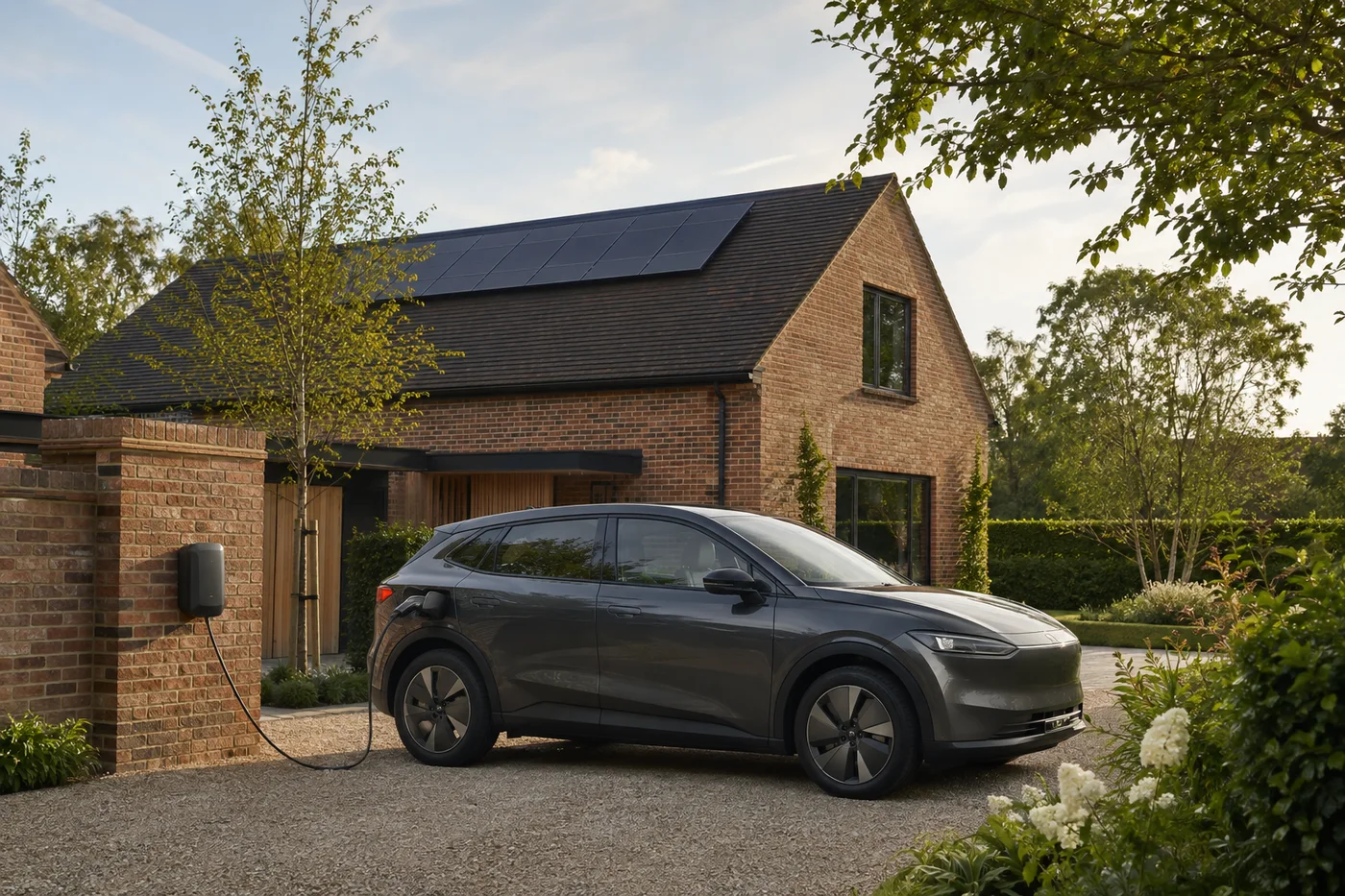
EV charging · Waltham Cross
Home EV charger installation in Waltham Cross
Partner installers can get your next appointment booked within 24 hours of receiving your enquiry.
- 01Parking and access
- 02Solar integration
- 03Smart scheduling
A home EV chargepoint supplies electricity to an electric vehicle. Solar panels can contribute while the car is connected during daylight. A smart charger can schedule charging, while a solar-aware system can use available surplus generation when the vehicle is connected. These are different features, so ask an installer which functions the proposed equipment supports.
If you leave Waltham Cross early and return after dark, direct daytime solar charging may be limited to days the car stays home. Compare that routine with an off-peak tariff and any home battery. A charger’s maximum rating does not mean your panels can provide that power continuously.
Waltham Cross Solar can pass an EV charging enquiry to a partner installer who can arrange your next booking within 24 hours. The installer checks parking arrangements, electrical capacity, cable route and charger compatibility before setting the specification and price.
Charging around your parking and schedule
Tell the installer whether your Waltham Cross home has a private driveway, allocated bay or shared parking. The permission and cable route must be assessed with the electrical supply. A standard home charger proposal should not assume permission to cross a public pavement.
If the car is parked at home during daylight, solar-surplus charging may be useful. If it is usually away, compare overnight grid charging and the household’s other demand. Ask how a chargepoint, solar inverter and battery will prioritise energy, including load management when appliances operate together.
An installer may discuss products such as myenergi zappi, Ohme or Pod Point. Those names do not establish compatibility with every solar or tariff arrangement, and we claim no brand partnership. Ask for the specific model, charging modes, app requirements, electrical scope and aftercare to be written into the proposal.
The details that shape your system.
Parking and cable route
Explain where the vehicle parks and who owns the land. If charging would involve a pavement or shared area, resolve permissions and a suitable arrangement first.
Supply and load assessment
Ask the installer to check the supply, protective equipment and the proposed charging load. The network operator may need a notification or application.
Surplus solar charging
Confirm how the charger measures available generation and shares it with a home battery. Ask what happens when cloud cover reduces output.
Tariff compatibility
Compare the whole electricity tariff, including daytime rates and standing charges. Check whether discounted charging needs a particular car, charger or supplier integration.
Coordination with battery storage
A charger and home battery can compete for surplus solar. Agree priorities and control settings so the system follows your intended routine.
Usability and support
Choose a practical cable length and location. Ask about app access, loss of internet connection, warranty terms and who deals with charger faults.
Choose around your energy needs.
Use these starting points to discuss a design with an installer. Equipment, price and suitability are confirmed after assessment.
Everyday charging
Smart home charger
Price after assessment
Installer assessment required
- Parking and electrical survey
- Scheduling and vehicle compatibility checked
- Itemised cable and installation costs
Daytime charging
Solar-aware charger
Price after assessment
Installer assessment required
- Solar monitoring integration reviewed
- Surplus charging behaviour explained
- Battery priorities configured where supported
A combined project
Solar and EV planning
Price after assessment
Installer assessment required
- Roof generation and driving routine compared
- Future supply demand considered
- Separate prices for PV and charging
Sources and further guidance
Checked 8 September 2026. Confirm current requirements with the relevant provider or authority.
Your Waltham Cross solar questions, answered.
Can I charge my EV entirely with solar?
That depends on generation, other household demand, mileage and when the vehicle is connected. Many homes still need grid charging, especially during winter or when the car is away in daylight. Ask for a realistic comparison based on your routine.
Do I need a home battery for solar EV charging?
No. Compatible equipment can use surplus solar directly while the car is plugged in. A home battery is a separate decision based on household demand, charging schedules and cost.
How much does an EV charger installation cost?
Ask for equipment, cable length, groundworks where relevant, protective equipment and any electrical upgrades to be itemised. The position of the chargepoint and supply can change the price substantially.
Can I install a charger if I park on the street?
A normal driveway installation cannot be assumed suitable for on-street parking. Ask the council about permitted solutions and have the installer assess the arrangement before buying equipment.
Who books the installation?
A partner installer can get your next appointment booked within 24 hours of receiving your enquiry. Survey and installation dates are agreed separately, after the necessary checks.
Your next step
Let’s see what your roof can do.
Tell us about your property, electricity use and the solar options you would like to explore. Partner installers can get your next appointment booked within 24 hours.