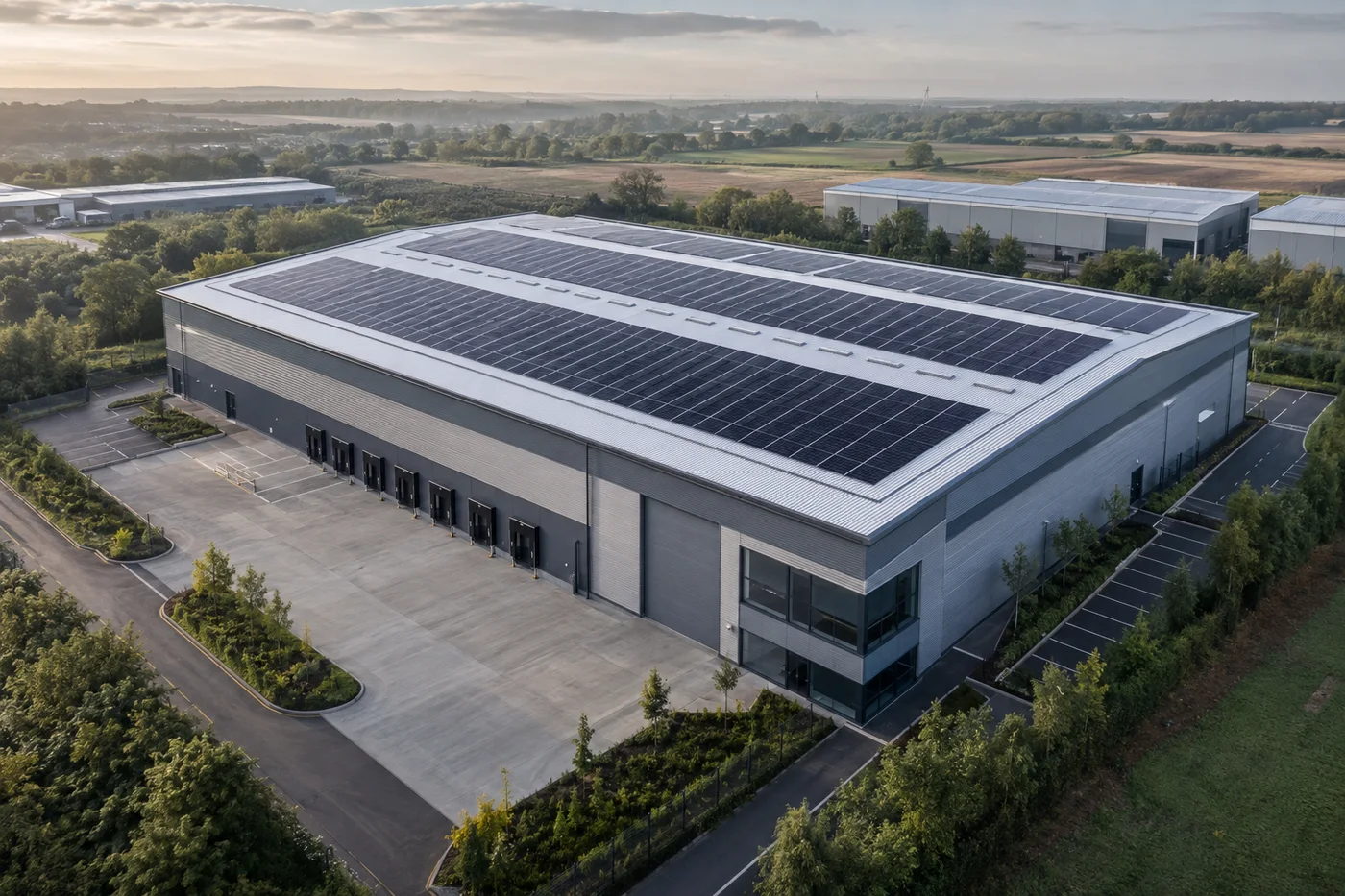
Commercial solar · Waltham Cross
Commercial solar panels for Waltham Cross businesses
Partner installers can get your next appointment booked within 24 hours of receiving your enquiry.
- 01Site feasibility
- 02Daytime energy use
- 03Grid connection
Commercial solar PV generates electricity at your premises. The most useful first comparison is between generation through the day and the electricity your business uses at those times. Annual bills alone can hide weekend closures, seasonal demand or a shift pattern that changes how much solar you can use.
For a warehouse, office, workshop or retail unit, gather interval consumption data where available, the supply details, roof information and your lease or ownership position. Ask an installer to model on-site consumption and export separately, and to state any assumed changes in energy prices.
Waltham Cross Solar handles commercial enquiries for the Waltham Cross and the surrounding area area. Partner installers can get a next appointment booked within 24 hours of receiving an enquiry. Feasibility, grid approval, installation planning and contracting are handled by the installer you choose.
Planning a local business installation
For a commercial solar PV installation, establish who controls the roof and the electricity supply before specifying panels. A leased unit, mixed-use building or shared business roof needs agreement with the landlord or managing agent before detailed design.
Ask the installer to assess working-day demand, roof loading, cable routes and network capacity together. A battery or workplace EV charger should have a separate purpose and cost in the proposal. Compare forecast on-site consumption with export income and include maintenance and replacement assumptions.
Check the full premises address before applying for council support or planning advice. Broxbourne and Enfield are separate authorities. Use the actual premises address to identify the relevant planning and support route; this website does not administer council applications.
The details that shape your system.
Demand and operating hours
Provide half-hourly electricity data if available, including weekends and seasonal changes. Ask whether the proposed system is sized for current loads or planned expansion.
Roof and structural checks
Confirm roof condition, loading, access and any material risks before detailed design. Roof warranties and a planned refurbishment can affect the installation approach.
Lease and landlord consent
Establish who owns the roof and equipment and how long you expect to occupy the premises. Record any landlord, insurer or lender requirements.
Grid connection and export
Your installer should assess the UK Power Networks process, connection capacity and any export limits. Do not commit to export income before the connection position is understood.
Battery storage and fleet charging
Compare storage or workplace charging against actual load and vehicle schedules. Additional equipment needs its own business case and electrical assessment.
Operations and maintenance
Agree monitoring access, inspections, fault response, cleaning where needed and responsibility for downtime. Include maintenance and potential equipment replacement in the financial model.
Choose around your energy needs.
Use these starting points to discuss a design with an installer. Equipment, price and suitability are confirmed after assessment.
On-site demand
Rooftop solar
Price after assessment
Installer assessment required
- Generation matched to operating hours
- Roof and supply feasibility assessed
- Consumption and export model separated
Load management
Solar with storage
Price after assessment
Installer assessment required
- Battery benefit modelled separately
- Power and usable capacity specified
- Controls and maintenance scope agreed
Workplace or fleet
Solar with EV charging
Price after assessment
Installer assessment required
- Vehicle dwell times reviewed
- Charger supply capacity assessed
- Access and charging management planned
Sources and further guidance
- UK Power Networks: solar, storage and EV connections
- Broxbourne Borough Council: planning
- Enfield Council: planning
Checked 8 September 2026. Confirm current requirements with the relevant provider or authority.
Your Waltham Cross solar questions, answered.
How much does commercial solar cost?
A useful price needs a site-specific design. Roof condition, access, electrical infrastructure, system size and grid works can materially change the budget. Ask for capital cost, ongoing costs and VAT treatment to be stated separately.
What is the payback period?
There is no single payback period for Waltham Cross businesses. It depends on installed cost, self-consumption, import prices, export terms and operating costs. Ask for assumptions and sensitivity scenarios rather than a guaranteed number of years.
Can a tenant install solar?
This depends on the lease and the necessary consents. Establish roof rights, equipment ownership, maintenance access and what happens at the end of the lease with your advisers and landlord.
Do commercial roofs follow domestic planning rules?
Do not assume they do. Have the installer and planning adviser check the rules that apply to the premises and proposed equipment. Confirm the relevant council using the premises address; nearby Enfield premises use Enfield Borough Council.
Do you offer finance or power purchase agreements?
Waltham Cross Solar does not advertise a finance product. If an installer proposes finance or a power purchase agreement, compare the full term, total payments, ownership, exit conditions and responsibilities with appropriate advice.
Your next step
Let’s see what your roof can do.
Tell us about your property, electricity use and the solar options you would like to explore. Partner installers can get your next appointment booked within 24 hours.